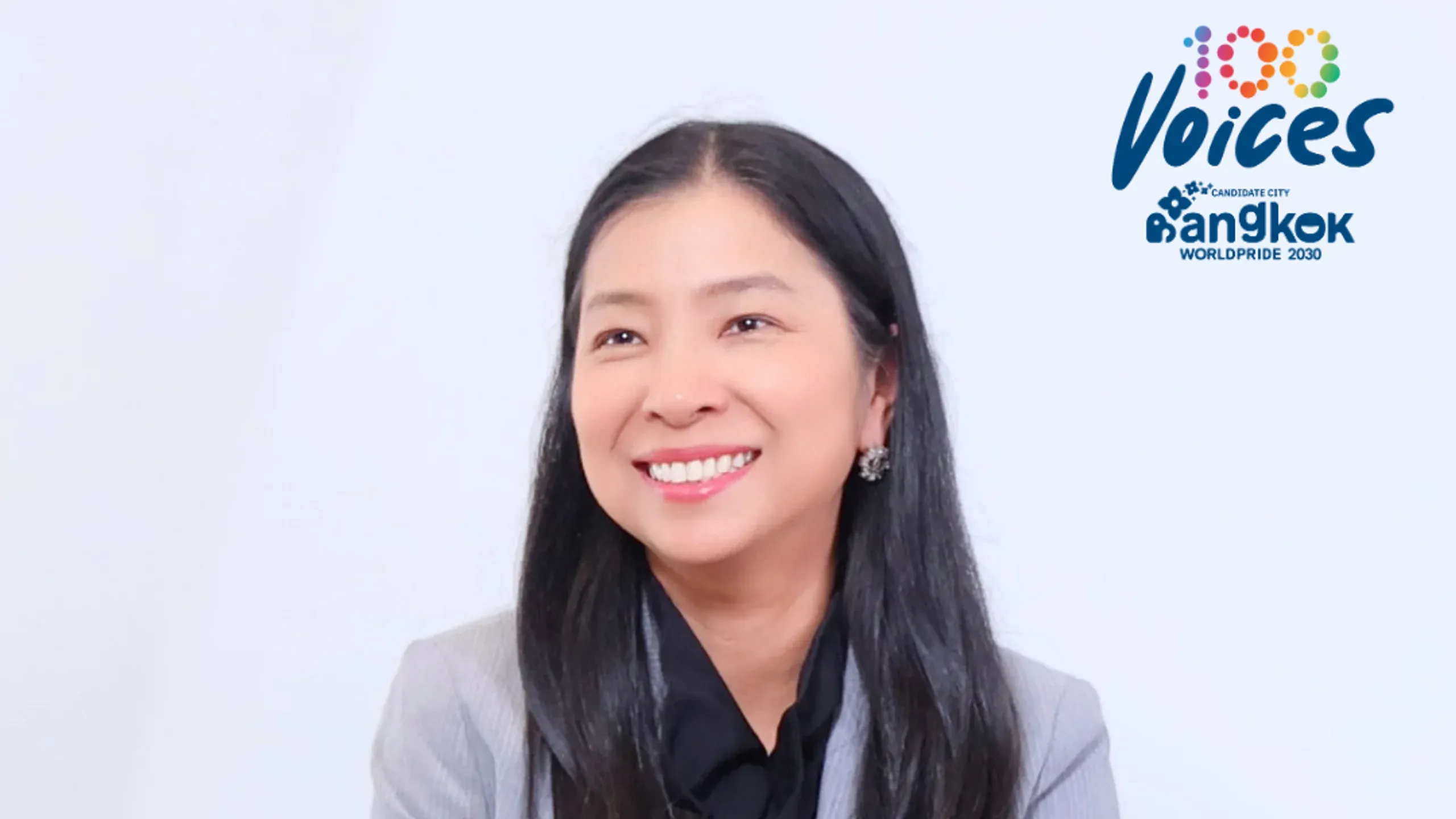

Healthcare That Understands Who You Are: ‘Dr. Ao’ on Gender-Affirming Care and Thailand’s Road to WorldPride 2030
- Dr. Jiraporn Arunakul (Dr. Ao), Adolescent Medicine Specialist, Department of Pediatrics, Faculty of Medicine Ramathibodi Hospital, and Co-founder of THPATH
- Dr. Ao believes that specialized clinics for gender-diverse people should provide a one-stop service grounded in rights, gender sensitivity, and each person’s specific needs.
- Care for children and adolescents must address physical and mental health, identity exploration, appropriate hormone care, and understanding within the family.
- Thailand has strong potential to host WorldPride 2030 because of legal progress, cross-sector collaboration, Bangkok Pride’s international success, and the country’s tourism readiness.
- WorldPride’s success should be measured by change—from laws, healthcare, and public services to families that embrace and support equality.
Dr. Jiraporn Arunakul, widely known as “Dr. Ao,” is an adolescent medicine specialist at the Faculty of Medicine Ramathibodi Hospital and a medical professional who has worked alongside LGBTQIAN+ communities for many years. She is also a co-founder of the Thai Professional Association for Transgender Health (THPATH), which brings together healthcare professionals, other practitioners, and community members working to advance the health and well-being of transgender and gender-diverse people. Dr. Ao also served as an adviser to the parliamentary committee considering Thailand’s marriage equality law.
For Dr. Ao, specialized clinics for gender-diverse people are no different in principle from diabetes, adolescent, or rare-disease clinics. Each population has specific needs and deserves care designed around the realities of their lives. A gender-diversity clinic should therefore operate as a one-stop service, where people can access multidisciplinary support in one place—from counseling and physical and mental healthcare to gender-affirming hormone services.
The essential element is not only clinical expertise, but also gender sensitivity. Knowledge and understanding of gender diversity remain uneven across healthcare systems. A specialized clinic allows teams to develop appropriate knowledge, skills, and attitudes so that patients are respected for who they are, understand their rights, and have a positive experience when seeking care.
Such clinics also serve as learning environments for medical students and residents. Gender-diverse healthcare was historically absent from much of formal medical education. Clinical learning spaces can therefore help prepare a new generation of professionals to provide more informed and respectful care.
Care for gender-diverse children and adolescents begins with recognizing the importance of being accepted by caregivers. Childhood is a formative period for identity and family relationships. During adolescence, physical changes driven by sex hormones may become distressing when they do not align with a young person’s gender identity, leading to stress, confusion, or anxiety.
Support must include counseling, a safe space for identity exploration, and reassurance that gender diversity is a normal part of human diversity—not an illness. In some cases, a medical team may consider hormone-related care to pause unwanted pubertal changes or support gender affirmation. This requires individualized, comprehensive care addressing physical health, mental health, and family well-being. Parents and caregivers also need space to learn how to listen, communicate, and support their child.
Dr. Ao believes Thailand has strong potential to host WorldPride 2030. The country has advanced LGBTQIAN+ rights through marriage equality and has a society and culture that are increasingly open to diversity. Bangkok also offers accessible public transport and is already a major global tourism destination.
Thailand’s greatest strength, however, may be its network of collaboration. Communities, civil society, healthcare professionals, government, businesses, media, and influencers have worked together to build Bangkok Pride from a small march into an internationally recognized event that attracts participants from around the world.
Hosting WorldPride would be more than staging a global festival. It would be a major advocacy opportunity—affirming that LGBTQIAN+ people deserve recognition and equal rights, narrowing persistent gender inequalities, and creating momentum for laws and policies that remain unfinished.
On the road to WorldPride 2030, Dr. Ao wants to see meaningful government support for both the event and broader reforms. These include legal gender recognition, appropriate titles and gender markers, and health-benefit and reimbursement systems that provide equitable access to gender-affirming healthcare.
Her vision also reaches beyond policy and the parade. She hopes to see families bring children to WorldPride—even families without LGBTQIAN+ members—so young people can encounter diversity and learn that gender-diverse people are fellow human beings who deserve the same rights and the same chance to live an ordinary life.
“We want to see change driven together—from the policy level to the individual level. We want families to bring children so they can see that gender-diverse people are people just like us, deserving equal rights and an ordinary life.”
Dr. Jiraporn Arunakul is a medical professional who believes good healthcare begins by respecting the person receiving it. For her, the road to WorldPride should not be measured only by attendance or the scale of the celebration, but by whether society itself changes—through policies that protect everyone, healthcare systems that understand every identity, and families ready to embrace diversity with respect.
Follow Bangkok Pride and join the movement across all channels:
Facebook: Bangkok Pride
Instagram: @bangkokprideofficial
X: @bangkokpride
TikTok: @bangkokpride
YouTube: Bangkok Pride
Website: bangkokpride.org
#100VoicesRoadToBangkokWorldPride2030 #BangkokPride #YellowChannel #กระทรวงการพัฒนาสังคมและความมั่นคงของมนุษย์ #interpride