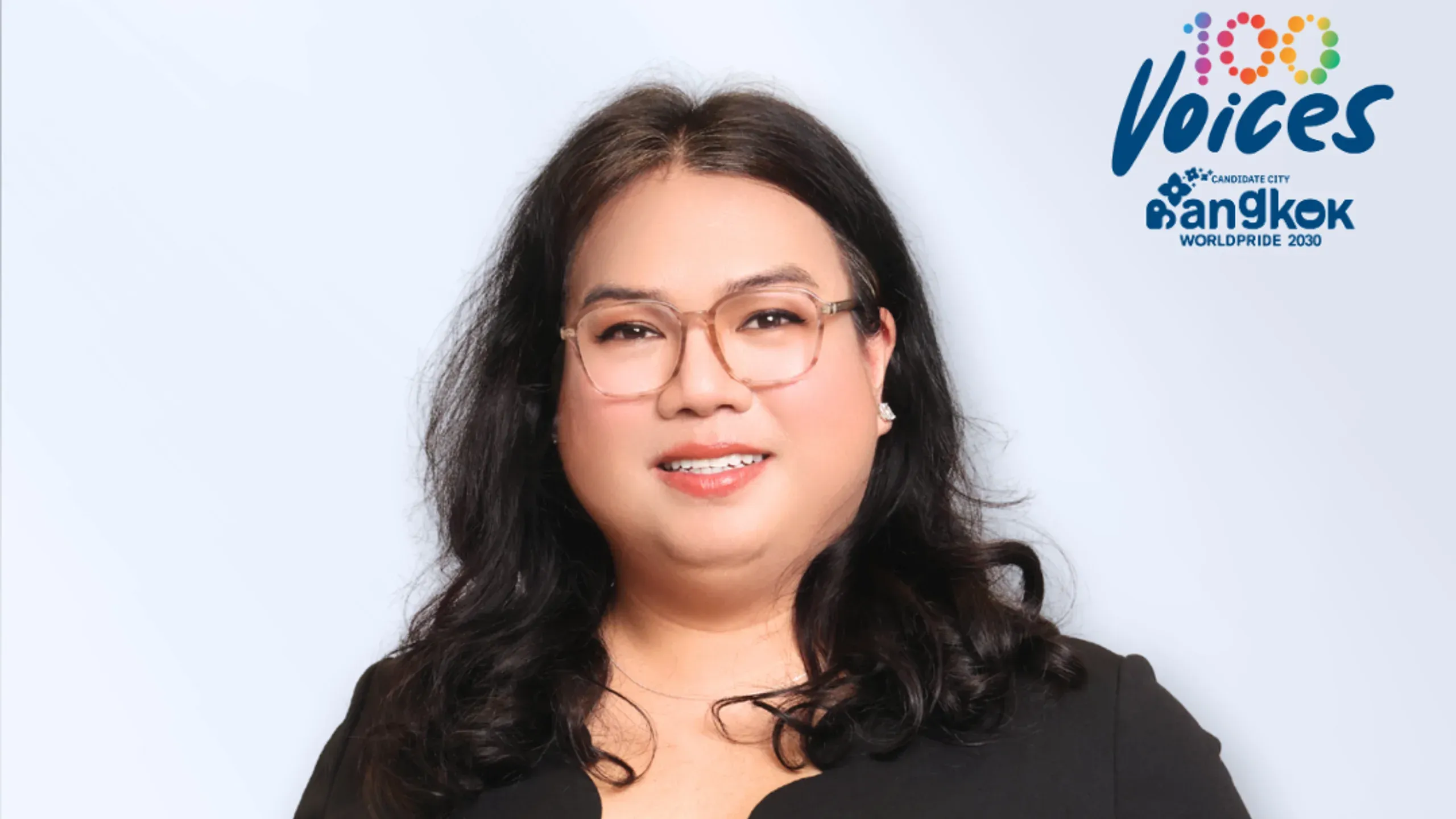

Opening the Door to Understanding: ‘Note Ratee’s’ Journey from Transgender Lived Experience to a Society Beyond Judgment
Note Ratee Taesombat, Executive Director, Thai Transgender Alliance for Human Rights (ThaiTGA)
- Note has transformed her experience of growing up in a Thai-Chinese family shaped by expectations and patriarchy into a commitment to protecting the rights of kathoey, transgender women, and transgender people.
- ThaiTGA connects the lived experiences of communities across Thailand’s four regions with data, research, and policy recommendations, ensuring that solutions respond to each area’s distinct context.
- Note sees Pride as both a political space and a space of opportunity—one that makes LGBTQIAN+ people’s identities, dignity, and fundamental rights visible.
- On the road to WorldPride, Thailand must advance legal gender recognition, inclusive service guidelines, and gender-sensitivity training so that acceptance becomes a lived reality for everyone.
Note Ratee Taesombat is a transgender woman and Executive Director of the Thai Transgender Alliance for Human Rights (ThaiTGA), an organization dedicated to promoting, supporting, protecting, and defending the rights of people who identify as kathoey, transgender women, or transgender people. Her work spans public education, prejudice reduction, assistance and remedies for those affected by discrimination, and advocacy for laws and policies that recognize and protect transgender people’s rights in Thai society.
Note grew up in Nakhon Ratchasima as the youngest child in a Thai-Chinese family. She experienced expectations, resistance, and patriarchal family norms, as well as violence, stigma, and discrimination similar to what many kathoey, transgender women, and transgender people face—from exclusion in employment to barriers in accessing healthcare. These experiences taught her that meaningful change must take place simultaneously across attitudes, social structures, and public policy.
Research on diverse sexualities within the meaning of family, in which Note participated, found that approximately 38.4 percent of transgender people, kathoey, and transgender women had experienced violence and discrimination. One significant factor is visible gender expression, or gender display, including appearance, clothing, and voice. When someone is perceived as differing from society’s male–female norms, that person may be more exposed to stigma and discrimination. Note emphasizes that people of other identities also experience violence; however, visibly gender-diverse people may become more readily targeted by prejudice.
A central part of ThaiTGA’s approach is transforming community experiences into evidence, research, and policy recommendations. The organization listens to people across Northern, Central, Northeastern, and Southern Thailand. Note stresses that people who share a gender identity do not necessarily share the same life experience. Place of origin, culture, belief, religion, family, and social environment all influence levels of acceptance, stigma, and discrimination. Equality initiatives must therefore be designed for the realities of each community rather than applying a single answer everywhere.
One of the community’s key demands is a legal gender recognition law that would allow people to amend titles and gender markers on official documents—or choose not to specify a gender—so that their documents correspond with their gender identity. For Note, this is not merely about changing words on paper. Accurate documents directly affect access to welfare, services, employment, and opportunities. When official records respect a person’s identity, transgender people can live more safely and with greater dignity.
Note’s understanding of Pride began with a small but meaningful experience at school. She saw sports day as one of the few occasions when LGBTQIAN+ children and young people could show their abilities, express themselves, and earn recognition. Later, attending the Sydney Gay and Lesbian Mardi Gras in Australia showed her that Pride was not only a celebration for LGBTQIAN+ communities, but also a celebration of pride in humanity’s diversity. People from different professions and identities could walk together to affirm the worth and dignity of everyone.
For Note, Pride is therefore both a political space and a space of opportunity. It is political because it shows society that the world consists of more than women and men; other gender identities and expressions deserve to be heard, recognized, and respected. Pride is also an opportunity to communicate that sexual and gender diversity is not a mental illness, a form of insanity, or punishment from a past life. LGBTQIAN+ people are not demanding special privileges—they are calling for the fundamental rights to which every human being is entitled.
Although Thailand is often portrayed as welcoming to LGBTQIAN+ people, the experience of Note’s transgender friend from Sydney reveals a gap between image and practice. Her friend’s documents correctly recognized her as a woman, yet a bank employee in Thailand addressed her as “Mister,” leaving her disappointed. This was an example of misgendering: assigning an identity to someone without asking or respecting that person’s self-determination.
On the road to WorldPride, Note believes Thailand already has a degree of social and cultural readiness, but still needs a stronger policy environment capable of welcoming people from around the world. This includes advancing legal gender recognition, establishing inclusive service guidelines, and providing gender-sensitivity training for personnel in government, the private sector, and service industries. Thailand should be more than a tourism destination; it should be a society where everyone is safe and treated with dignity.
Note’s message to society is that opening our minds to gender diversity can become the first exercise in learning not to judge people for other differences, including skin color, belief, or religion. She believes that if we stop judging one another according to gender, we can begin opening our hearts and recognizing the humanity we share.
“The first exercise on the road to WorldPride is to open the door to understanding gender and stop judging one another by gender. Doing so will help us open other doors in our hearts and stop judging one another’s humanity.”
Note Ratee Taesombat is an advocate for the rights of kathoey, transgender women, and transgender people who transforms personal experience and community voices into knowledge, recommendations, and policy advocacy. For her, the road to WorldPride is measured not only by the scale of a parade, but by whether everyone is seen, has equal rights and opportunities, and can live with dignity without being judged for their gender.
Follow Bangkok Pride and join the movement across all channels:
Facebook: Bangkok Pride
Instagram: @bangkokprideofficial
X: @bangkokpride
TikTok: @bangkokpride
YouTube: Bangkok Pride
Website: bangkokpride.org
#100VoicesRoadToBangkokWorldPride2030 #BangkokPride #YellowChannel #กระทรวงการพัฒนาสังคมและความมั่นคงของมนุษย์ #interpride