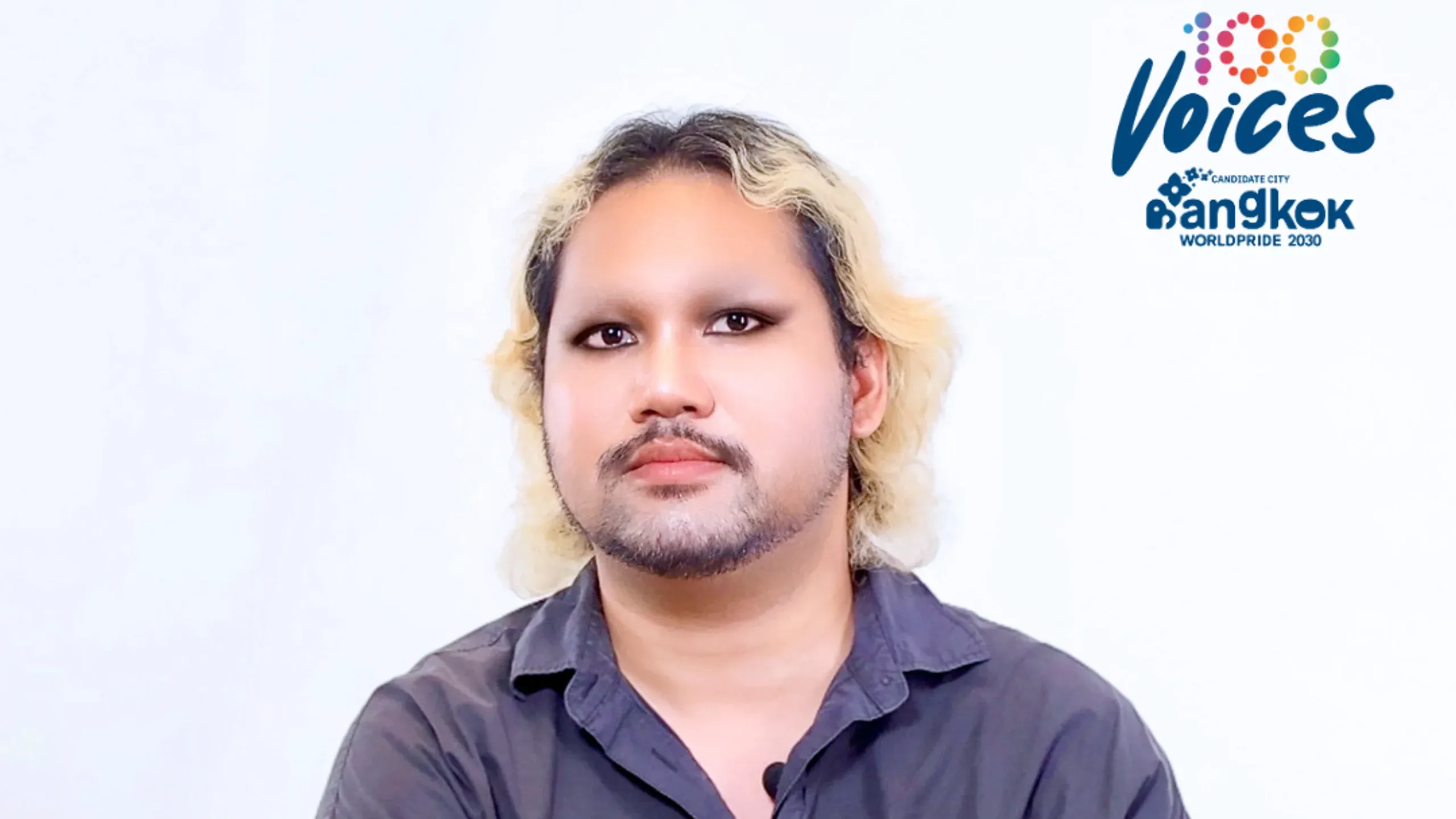

When Diversity Is the Heart of Democracy: Raptor Siraphop Attohi on Art, Resistance, and a Pride That Must Go Beyond the Rainbow
- Raptor Siraphop Attohi, Human Rights, Democracy, and Diversity Activist and Artist with H0M0HAUS
- Democracy and LGBTQIAN+ rights are not separate struggles; both depend on recognising diverse people, voices, identities, and needs.
- Performing arts can be a political space where queer, trans, non-binary, and gender-nonconforming artists tell their own stories.
- WorldPride 2030 can shift the centre of LGBTQIAN+ history toward Asia and Southeast Asia rather than reproduce a solely Western narrative.
- Meaningful support must appear in laws, workplace policies, safe public spaces, and everyday practice—not only rainbow branding in June.
Raptor Siraphop Attohi identifies as queer, trans queer, and trans non-binary. Their work spans democracy and gender-diversity activism, theatre, and H0M0HAUS, an artist group that organises a performing arts festival focused on diversity each June.
For Raptor, activism and art are not separate paths. Since becoming involved in Thailand’s democratic movement in 2020, they have sought to bring feminist and LGBTQIAN+ perspectives into democratic organising. Democracy cannot be reduced to elections or political procedures; it must also address whose bodies, identities, experiences, and rights are recognised.
Returning to theatre led Raptor to ask how activism could continue through artistic practice. Theatre, storytelling, humour, and embodied performance became languages through which queer people could appear in public on their own terms.
Creating space, not merely staging performances
H0M0HAUS emerged from a gap in Thailand’s performing arts. LGBTQIAN+ artists have long been present, yet trans, non-binary, and visibly gender-nonconforming people still receive limited roles and opportunities. Raptor recalls seeing trans and gender-diverse classmates while studying theatre, only to watch many disappear from the professional field after graduation.
This is not only an economic problem; it is a question of space. H0M0HAUS therefore provides a platform where queer and LGBTQIAN+ artists can present work, develop their voices, and grow. Building it has been difficult: work that questions binary gender and heterosexual norms can struggle to attract understanding, funding, and resources. H0M0HAUS is now in its third year; according to Raptor, it found no funding in its second year and began receiving support from several funds in its third.
Democracy must ask who “the people” are
A formative moment was “Mob Tung Ting,” a queer protest that emerged during Thailand’s pro-democracy movement in 2020. Raptor responded to the political moment through a language embedded in queer life: drag, parody, satire, and humour.
Queer visibility, for Raptor, is political in itself. Humour does not make resistance less serious; it can be a means of survival and a political tool. Queer joy and celebration can therefore be forms of resistance when connected to rights and dignity.
The campaign for marriage equality demonstrated that human rights movements cannot be separated from democratic movements. If democracy rests on popular sovereignty, we must ask who “the people” are. They do not share one gender, identity, opinion, economic position, or set of needs.
“The true heart of democracy is the diversity of people—the diversity of opinions, voices, genders, and identities.”
Democratic movements must include diverse issues, while LGBTQIAN+ and feminist movements must recognise that gender intersects with economic, class, and social conditions. These struggles are, in Raptor’s words, “the same flesh.”
A WorldPride that shifts the story’s centre
Thailand’s history of LGBTQIAN+ organising and marriage equality give the country potential to host WorldPride, Raptor says, but these achievements must not hide unfinished work—particularly legal gender recognition and protection from discrimination.
WorldPride in Asia can also change how global LGBTQIAN+ history is told. Pride histories often begin with Stonewall and movements in the United States or Europe, although gender-diverse communities and resistance exist worldwide, including across Southeast Asia.
Hosting WorldPride in Thailand should not mean transplanting a Western model into Asia. It should ask what Asian Pride looks like, what the region’s histories can teach the world, and how communities here wish to tell their own stories.
From rainbow imagery to tangible rights
Thailand is often described as queer-friendly, but Raptor calls that image “half true and half untrue.” Many LGBTQIAN+ people can live visibly in public, yet violence and discrimination remain.
The challenge on the road to 2030 is to ensure Pride’s rights-based core is not overshadowed by parties or economic gain. Employers and institutions need policies that allow trans, non-binary, openly gay, lesbian, and gender-nonconforming people to work without hiding. A rainbow logo in June means little without year-round protection.
At the national level, Raptor raises questions about anti-discrimination protection, responses to hate crimes, legal gender recognition, family rights, protection for sex workers, safe public spaces, and effective implementation of existing rights. The precise legal status and terminology should be verified before publication.
Change must also happen within LGBTQIAN+ communities. Diversity does not mean sameness, and belonging to the community does not entitle anyone to speak for everyone. Progress begins by listening to people directly affected by a law or policy.
“If you want us to represent the country, you must support us so that we can stand with dignity and be proud in our own way. We are gender-diverse people who are proud—and that is Pride.”
Raptor asks us to see WorldPride 2030 not as a finish line measured by spectacle or tourism revenue, but as a milestone toward a society where everyone can speak, work, create, and live with equal protection. If Bangkok and Thailand wish to stand proudly before the world as hosts, LGBTQIAN+ communities must also be able to stand with dignity.
Follow Bangkok Pride and join the movement across all channels:
Facebook: Bangkok Pride
Instagram: @bangkokprideofficial
X: @bangkokpride
TikTok: @bangkokpride
YouTube: Bangkok Pride
Website: bangkokpride.org
#100VoicesRoadToBangkokWorldPride2030 #BangkokPride #YellowChannel #กระทรวงการพัฒนาสังคมและความมั่นคงของมนุษย์ #interpride